
Transfer tax
Ohio charges a conveyance fee based on value, set by each county. It is customarily charged to the grantor, and how it applies to a gift with no consideration is confirmed when we prepare the deed.
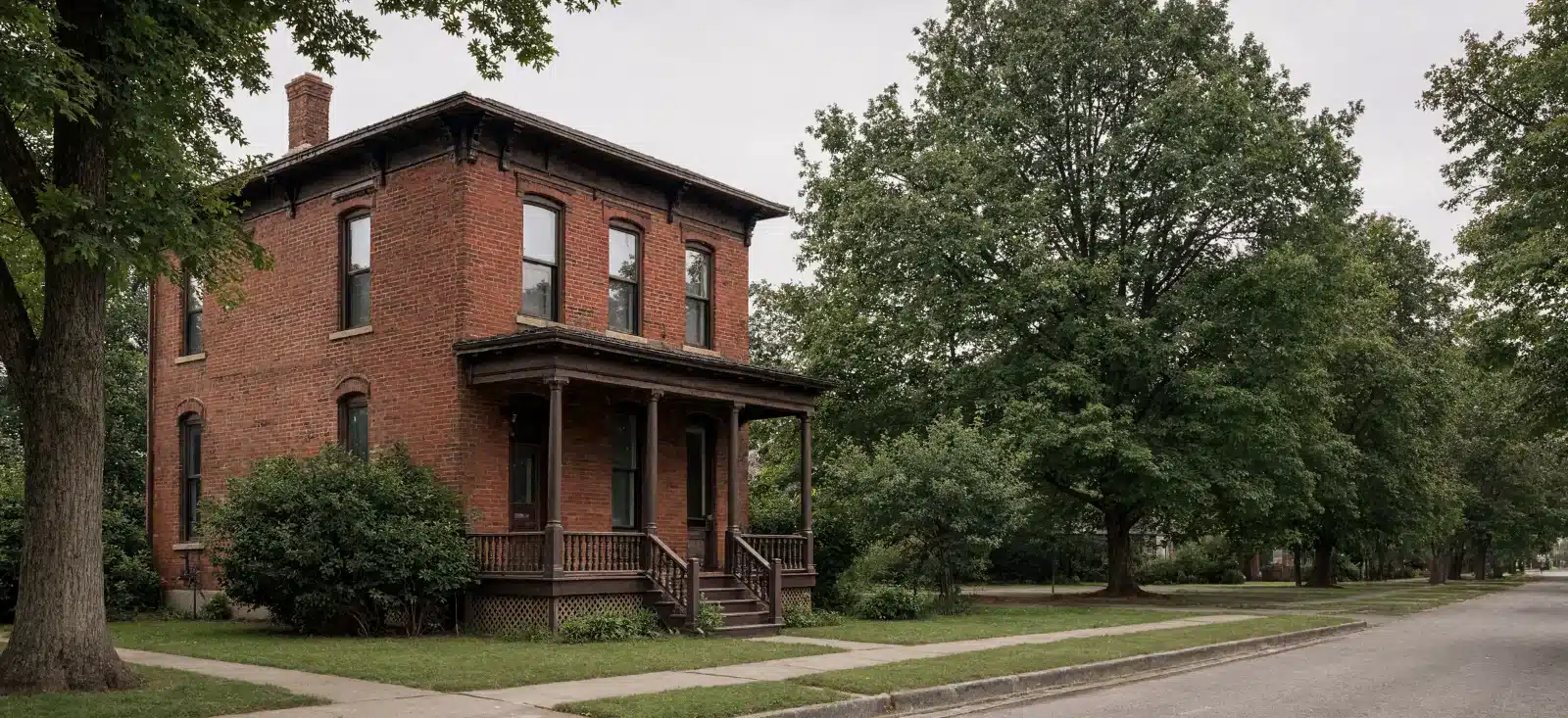
Ohio is one of the few states that still recognizes dower, which means a spouse who is not on the deed may still need to sign it. Beyond that, the property here divides cleanly: sound houses in cities where the repair bill outruns the value, farmland in the west, and land in the east sitting over the Utica shale where the minerals left the surface years ago. All 88 counties.
Federal tax rules are the same in every state. These three are set by Ohio and by the county where the property sits.
Ohio charges a conveyance fee based on value, set by each county. It is customarily charged to the grantor, and how it applies to a gift with no consideration is confirmed when we prepare the deed.
Ohio retains dower, an interest a spouse holds in the other spouse’s real property during the marriage. In practice a married owner’s spouse releases dower in the deed even when not on title. It is a one-line addition when caught early and a defect in the chain when missed, so we check marital status before drafting.
Deeds are recorded with the county recorder for the county where the property sits. You sign before a notary wherever you live, and we handle the filing.
Four situations that recur across the state.
Each links to the full guide for that type, including how a donation compares with selling.
Six Ohios, each with a different reason property comes loose.
Cleveland, Akron and Youngstown: solid older housing stock, active county land banks, and repair economics that do not work on a sale.
Columbus and the ring around it, where the question is usually an inherited house in a neighborhood that has changed value quickly.
Cincinnati and Dayton: hillside houses, older two-families and small commercial buildings on corridors that emptied.
Toledo and the flat farm counties, with grain ground, drainage tile and small-town commercial.
Hill country, timber and the Utica shale belt, where severed oil and gas rights are the norm rather than the exception.
Productive cropland held by families whose next generation farms elsewhere, often with a farmhouse nobody lives in.
Ohio charges a conveyance fee based on value, set by each county. It is customarily charged to the grantor, and how it applies to a gift with no consideration is confirmed when we prepare the deed.
No. We prepare the deed in the form Ohio requires for the county where the property sits, you sign before a notary where you live, and we record it with the county recorder.
In Ohio, usually yes. Dower means a spouse holds an interest in the other’s real property during the marriage, and the release is made in the deed. We confirm marital status before drafting so it is handled at signing rather than discovered at recording.
Ohio has a state income tax, and how it treats a charitable contribution is set by Ohio law rather than by us. Your federal deduction follows the usual IRS rules. Take the state question to your own advisor.
Yes, and it is common in eastern Ohio. Surface-only ownership is ordinary fee ownership with a known limitation, and the appraisal reflects exactly what you own. Tell us whether any lease is producing.
We do not provide tax or legal advice. State and local transfer tax rules change; we confirm current requirements when we prepare each deed. Consult your own advisor.
The county and a parcel number are enough to start.