Step one
Tell us about the farm
County, acreage, how it is farmed now and by whom, and anything owed against it. Send the lease, any program contracts and the tax bill if you have them. A specialist reviews and calls back.
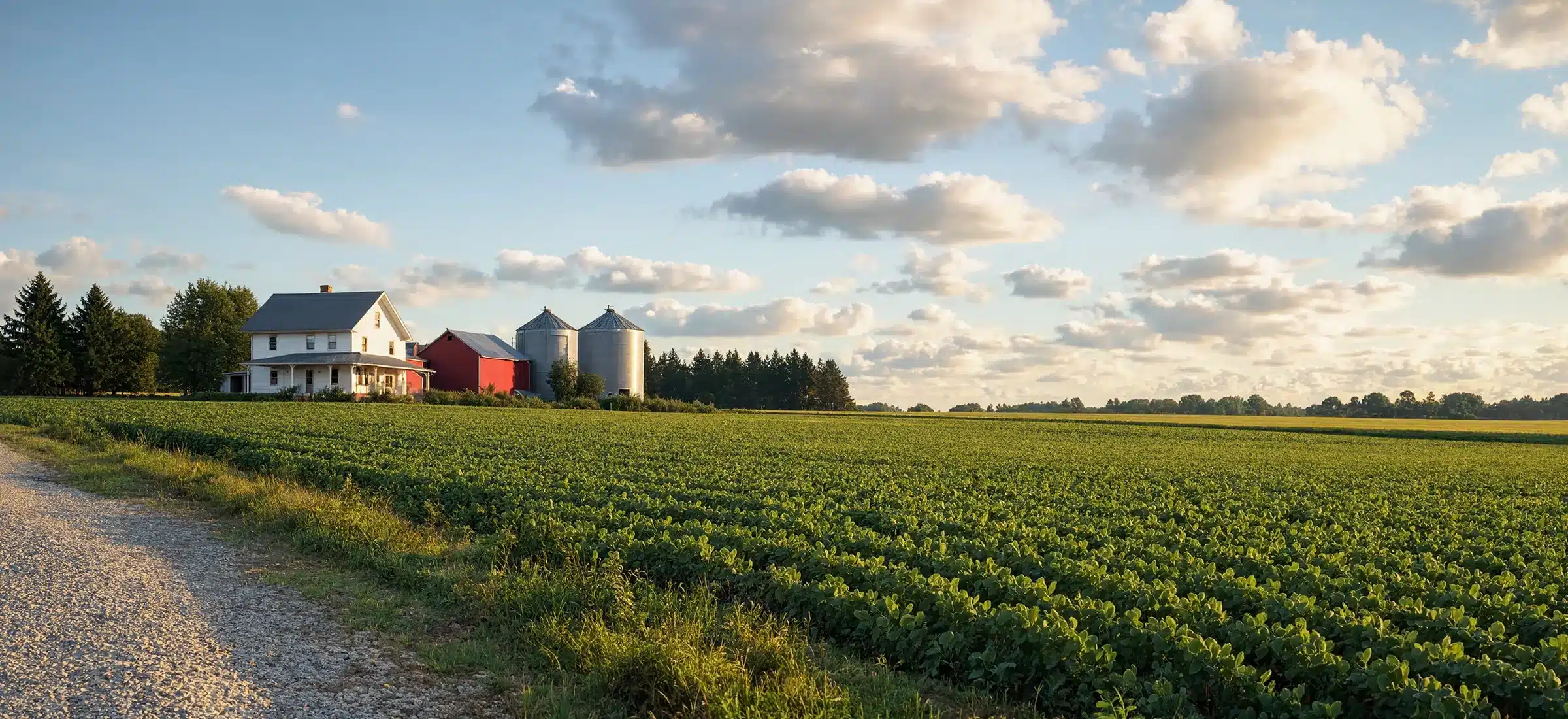
Real Estate with Causes accepts donated farmland nationwide: row-crop ground, pasture and hay land, orchards and vineyards, irrigated fields and whole farmsteads with a house and outbuildings. Families donate farmland when no one is taking over the operation, when heirs live far away, or when appreciated land held for decades would carry a large capital gains bill on sale. We prepare and record the deed in the county where the land sits.
Every property gets a look. Name, phone and email are the only required fields.
Farmland comes with a few questions a house does not: the tenant, the season and any program contracts. We sort those out before anything is signed.
County, acreage, how it is farmed now and by whom, and anything owed against it. Send the lease, any program contracts and the tax bill if you have them. A specialist reviews and calls back.
Timing is set to respect the current crop year and the tenant’s lease. Our staff prepares the deed for the state and records it with the county.
Property taxes, insurance and the landlord relationship transfer on the day the deed records. You receive a written acknowledgment and, where required, a signed Form 8283.
Farmland held for a generation often has a very low basis, which makes the tax side of this comparison larger than for most property.
| Selling the farm | Donating the farm | |
|---|---|---|
| Time to be done with it | Listing or auction, buyer financing and closing, usually timed around harvest and the lease year. | No listing and no auction. The schedule is set by title, the tenant’s lease and the crop year. |
| What you pay | Broker or auctioneer commission, seller closing costs and survey where required. | No escrow, no closing and no commission. The qualified appraisal is your expense and your choice of appraiser. Back taxes are usually the donor’s, though we sometimes absorb them where the land supports it. |
| The tenant | The lease usually has to be terminated or honored by the buyer, depending on state law and notice dates. | The lease transfers with the land and we become the landlord through its term. |
| Tax outcome | Capital gains on decades of appreciation above a low basis, plus recapture on depreciated farm buildings. | A charitable deduction reported on Form 8283. For land held more than a year the deduction is generally fair market value, limited to 30% of AGI, with a five-year carryforward. |
| Program contracts | Buyers may need to assume or end conservation or commodity program contracts, sometimes with repayment. | Tell us what the land is enrolled in. We look at how a contract transfers before the gift is completed. |
| Where the value goes | To you, less commission, closing costs and tax. | To our charitable programs, less the cost of the transfer and the sale. |
We do not provide tax or legal advice. Deduction outcomes depend on holding period, property type, use and a qualified appraisal. See IRS Publication 526, Publication 561 and the Form 8283 instructions, and consult your own advisor.
Six kinds of agricultural land that reach us regularly. Find the one closest to yours.
 Row-crop ground
Corn, soybeans, wheat and small grains, usually cash-rented to a neighboring operator. Soil productivity and drainage drive the appraisal.
Row-crop ground
Corn, soybeans, wheat and small grains, usually cash-rented to a neighboring operator. Soil productivity and drainage drive the appraisal.
 Pasture and hay land
Fenced grazing and hay ground, often with a pond or creek. Fencing, water and any grazing lease are part of the review.
Pasture and hay land
Fenced grazing and hay ground, often with a pond or creek. Fencing, water and any grazing lease are part of the review.
 Orchards and vineyards
Permanent plantings are part of the land’s value, and their age and condition matter to the appraisal.
Orchards and vineyards
Permanent plantings are part of the land’s value, and their age and condition matter to the appraisal.
 Whole farmsteads
The house, the machine shed, the bins and the ground together. Many families donate the farmstead after the last generation to farm it has passed.
Whole farmsteads
The house, the machine shed, the bins and the ground together. Many families donate the farmstead after the last generation to farm it has passed.
 Organic and specialty farms
Certified organic ground carries its certification history with it. Tell us the certifier and the status.
Organic and specialty farms
Certified organic ground carries its certification history with it. Tell us the certifier and the status.
 Irrigated cropland
Pivots, wells and water rights are often worth as much as the soil. We review how the water rights are held and whether they transfer with the land.
Irrigated cropland
Pivots, wells and water rights are often worth as much as the soil. We review how the water rights are held and whether they transfer with the land.
The ground and the iron are two separate gifts. We take the farmland; our sister program Cars with Causes takes the machinery, and the two can be scheduled around the same date so the place is cleared once. If a line of equipment is sitting in the shed while the land changes hands, start at farm and ag equipment donations and name what is there. A whole dispersal goes on one form: tractors, harvest equipment, the hay outfit, tillage, grain handling, the shed row of three-point implements.
Most farms send a farm tractor or two, sometimes a combine harvester with its corn and grain heads, and the hay equipment: a round baler, a mower conditioner, a rake or tedder. Tillage and planting equipment moves the same way, whether that is a planter, a grain drill or a disc harrow, and so do the things that make a farmstead run: grain augers and bins, a sprayer, center pivot irrigation, dairy and barn equipment.
Two practical differences from the land. Ag equipment is not titled, so ownership is shown by a bill of sale, dealer paperwork, a depreciation schedule or estate documents. And the machinery is valued on its own: the appraisal of your farmland does not cover it, and equipment that clears $5,000 is appraised separately under that program's rules.
Farmland is often long-held, highly appreciated property, which is where a donation’s tax treatment differs most from a sale.
For land held more than a year, the deduction is generally fair market value as established by a qualified appraisal, limited to 30% of adjusted gross income, with a five-year carryforward. Electing the 50% limit means deducting your basis instead.
Above $5,000 the IRS requires a qualified appraisal and Form 8283 Section B, signed by the appraiser and acknowledged by us. Above $500,000 the appraisal is attached to your return. Farmland appraisals rely on comparable sales and productivity.
Depreciated farm buildings, severed mineral or water rights, crops in the ground and a remaining mortgage are each treated differently. A mortgage makes the gift a bargain sale. None of these rule a donation out.
The lease transfers with the land and we become the landlord for its remaining term. We will want a copy of the lease, written or not, and we will tell the tenant who to pay. If the lease is a handshake, state law usually sets the notice rules and we follow them.
Yes, but the timing and the crop need to be addressed in the gift. A growing crop can belong to you, the tenant or both depending on the lease, and it is handled separately from the land. We usually plan the recording date around harvest to keep it simple.
No, but the contract matters. Some program contracts can be transferred to a new owner and some require repayment if ended early. Send us the contract and we will look at how it transfers before anything is signed.
Often, yes, if the house can be separated as its own parcel under local rules. That usually means a survey and a split approved by the county. Keeping a right to use part of the same parcel is a different thing, a partial interest, and generally does not qualify for a deduction.
Only if you own them and the deed conveys them. In many areas minerals or water rights were severed long ago, and in others they are the most valuable part of the property. Tell us what your deed and county records show, and your advisor can confirm the tax effect of including or reserving them.
Eight other property classes, each with its own transfer rules and its own page.
Send the county, the acreage and how it is farmed now, and we will tell you plainly what a donation would look like.