
Step one
Tell us about the property and the people
The property, its approximate value, and the ages of anyone who will receive payments. A specialist reviews it and calls to talk through whether an annuity fits.
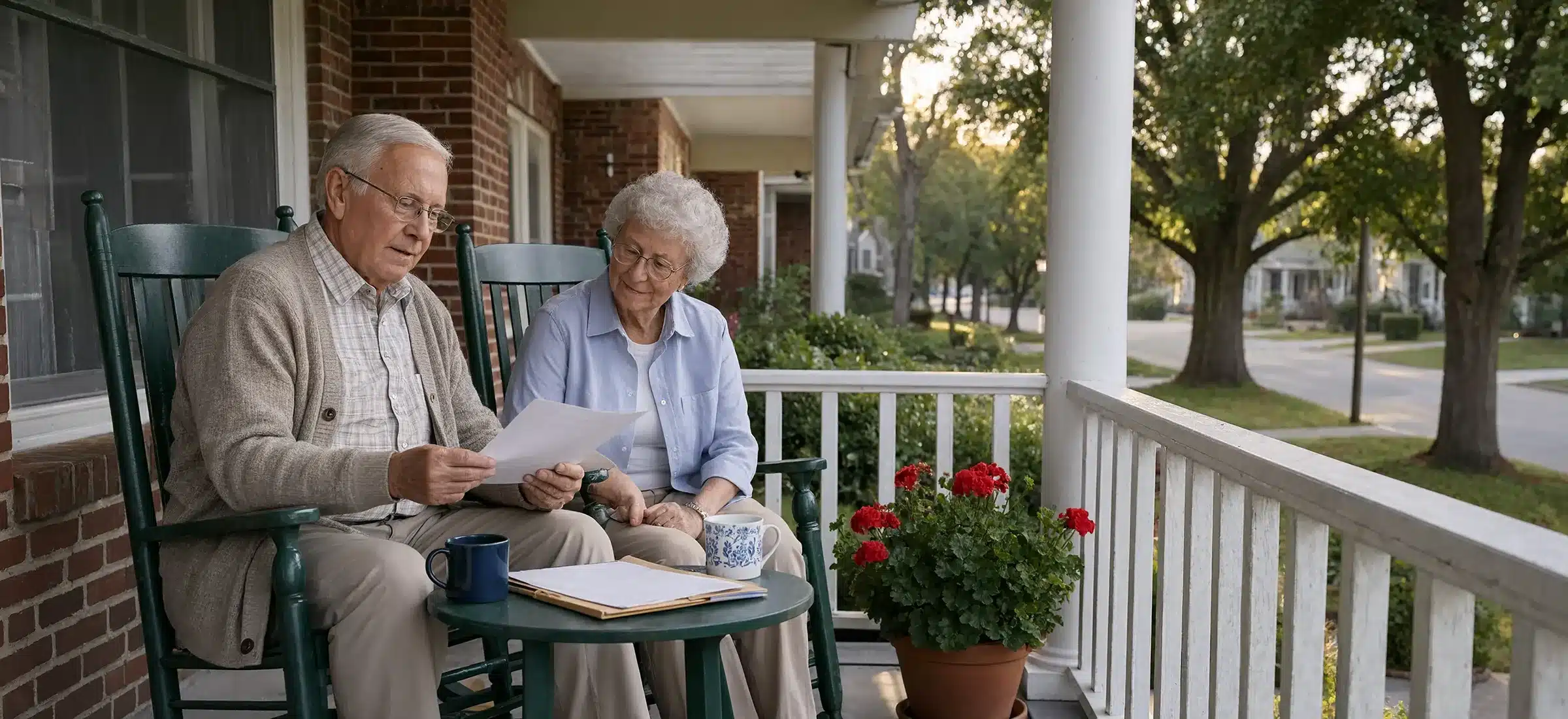
A charitable gift annuity lets you deed a house, land, farm or commercial building to Real Estate with Causes and receive fixed quarterly payments for the rest of your life. Your age when the transfer is finalized sets the payout rate, the property’s appraised value sets the payment, and a written annuity agreement confirms both before any property changes hands. Charitable gift annuities funded with real estate are available in all 50 states.
Every property gets a look. Name, phone and email are the only required fields.
The property is reviewed like any gift. The difference is the written annuity agreement that comes with it.
The property, its approximate value, and the ages of anyone who will receive payments. A specialist reviews it and calls to talk through whether an annuity fits.
Payment amount, start date and schedule are set in a written agreement before the transfer. Your advisor should review it. Our staff then prepares and records the deed.
The property becomes ours on the day the deed records, and payments follow the agreement for life. You receive a written acknowledgment and, where required, a signed Form 8283.
Single-life rates for 2026. Your rate is fixed by your age on the date the property transfer is finalized and does not change for the life of the annuity. The example payments assume a property appraised at $250,000.
| Age at transfer | 2026 payout rate | Annual payment on a $250,000 gift |
|---|---|---|
| 70 | 6.3% | $15,750 a year, paid quarterly |
| 75 | 7.0% | $17,500 a year, paid quarterly |
| 80 | 8.1% | $20,250 a year, paid quarterly |
| 85 | 9.1% | $22,750 a year, paid quarterly |
| 90 and over | 10.1% | $25,250 a year, paid quarterly |
Suggested single-life rates for 2026. Two-life annuities pay a lower rate. Your actual rate and payment are set in your written annuity agreement. We do not provide tax or legal advice.
Whether you move out or stay in the home decides which structure fits.
Option A
Best for downsizing and immediate income. You deed a property you no longer want to live in or manage: a rental, a second home, land, or your residence if you are ready to move. Taxes, insurance and upkeep end at transfer, and fixed quarterly payments begin.
Option B
Best for staying in your home. You donate the future ownership of your home or farm and keep the legal right to live there for life. Depending on your age and the property’s value, the gift can also provide a lifetime annuity. How retained life estates work.
For an owner who wants income from appreciated property without selling it, these are the two routes most often compared.
| Selling and investing | Gift annuity funded with property | |
|---|---|---|
| What you receive | Sale proceeds, less costs and tax, which you invest yourself. | Fixed payments for life under a written agreement, plus a partial charitable deduction. |
| What you pay | Commission, closing costs, and capital gains tax on the sale. | No escrow, no closing and no commission. The qualified appraisal is your expense and your choice of appraiser. |
| Capital gains | Due in full in the year of sale. | Part of the gain may be reported over time as payments are received, under the bargain-sale rules. Your advisor confirms the treatment. |
| Investment risk | Yours. Returns depend on how the proceeds are invested. | Payments are fixed by the agreement and backed by the charity’s general assets. |
| Carrying cost | Continues until the sale closes. | Stops on the day the deed records. |
| What remains at the end | Whatever is left in your estate. | The remaining value supports our charitable programs. |
We do not provide tax or legal advice. Deduction outcomes depend on holding period, property type, use and a qualified appraisal. See IRS Publication 526, Publication 561 and the Form 8283 instructions, and consult your own advisor.
Six situations where owners most often ask about it. Find the one closest to yours.
 Planning with an advisor
Your attorney or planner has suggested turning property into income. We work with them on the terms and the documents.
Planning with an advisor
Your attorney or planner has suggested turning property into income. We work with them on the terms and the documents.
 A home owned for decades
A house with a very low basis that you no longer need. An annuity can turn it into income without a large capital gains bill in one year.
A home owned for decades
A house with a very low basis that you no longer need. An annuity can turn it into income without a large capital gains bill in one year.
 Wanting fixed income
Property that costs money every year and pays nothing. Payments under the agreement are fixed and do not depend on markets.
Wanting fixed income
Property that costs money every year and pays nothing. Payments under the agreement are fixed and do not depend on markets.
 Downsizing
Moving to something smaller and leaving a house that would take months to sell. The annuity can start soon after the deed records.
Downsizing
Moving to something smaller and leaving a house that would take months to sell. The annuity can start soon after the deed records.
 A move to retirement living
Entering a community that needs a fixed monthly budget. Predictable payments can help, and your advisor can check how they fit.
A move to retirement living
Entering a community that needs a fixed monthly budget. Predictable payments can help, and your advisor can check how they fit.
 Leaving something behind
Owners who want the property to support charity after them and some income from it now.
Leaving something behind
Owners who want the property to support charity after them and some income from it now.
A gift annuity is part gift and part exchange. Each piece is taxed differently.
You may deduct the difference between the property’s appraised fair market value and the present value of the annuity payments, calculated using IRS tables. The deduction is subject to the usual AGI limits and carryforward rules.
Each payment is generally split among a tax-free return of basis, capital gain and ordinary income, following the bargain-sale rules. The split is set when the annuity begins and your advisor will confirm it.
A qualified appraisal and Form 8283 Section B are required above $5,000. Gift annuities are regulated by state law, and some states have specific requirements. We confirm what applies before the agreement is signed.
Your rate is set by your age when the transfer is finalized, from 6.3% at age 70 to 10.1% at 90 and over under the 2026 single-life rates above. Your payment is that rate times the property’s appraised value, paid quarterly. Two-life annuities pay less. Everything is confirmed in the written agreement before you sign.
Yes, a gift annuity can be written for one or two lives. Payments on a two-life annuity continue until the second person dies, and the payment amount reflects both ages.
Houses, land, farms and other real property can all be considered. Property that is easy to sell, has clear title and carries no mortgage is the simplest. Property with a mortgage is more complicated and is reviewed case by case.
No. With a gift annuity you give up the property and receive payments. With a retained life estate you keep living in the property for life and receive no payments. Both can make sense, and they suit different goals.
They can begin soon after the deed records, or be deferred to a later date you choose, which generally changes the payment amount. The start date and schedule are written into the agreement.
Eight other property classes, each with its own transfer rules and its own page.
Send the property, its approximate value and the ages of anyone receiving payments, and we will tell you plainly whether an annuity fits.