
Step one
Tell us about the house
Address, condition, who is on the title, and whether anything is owed against it. A specialist calls back, usually the same day, and tells you plainly whether it works.
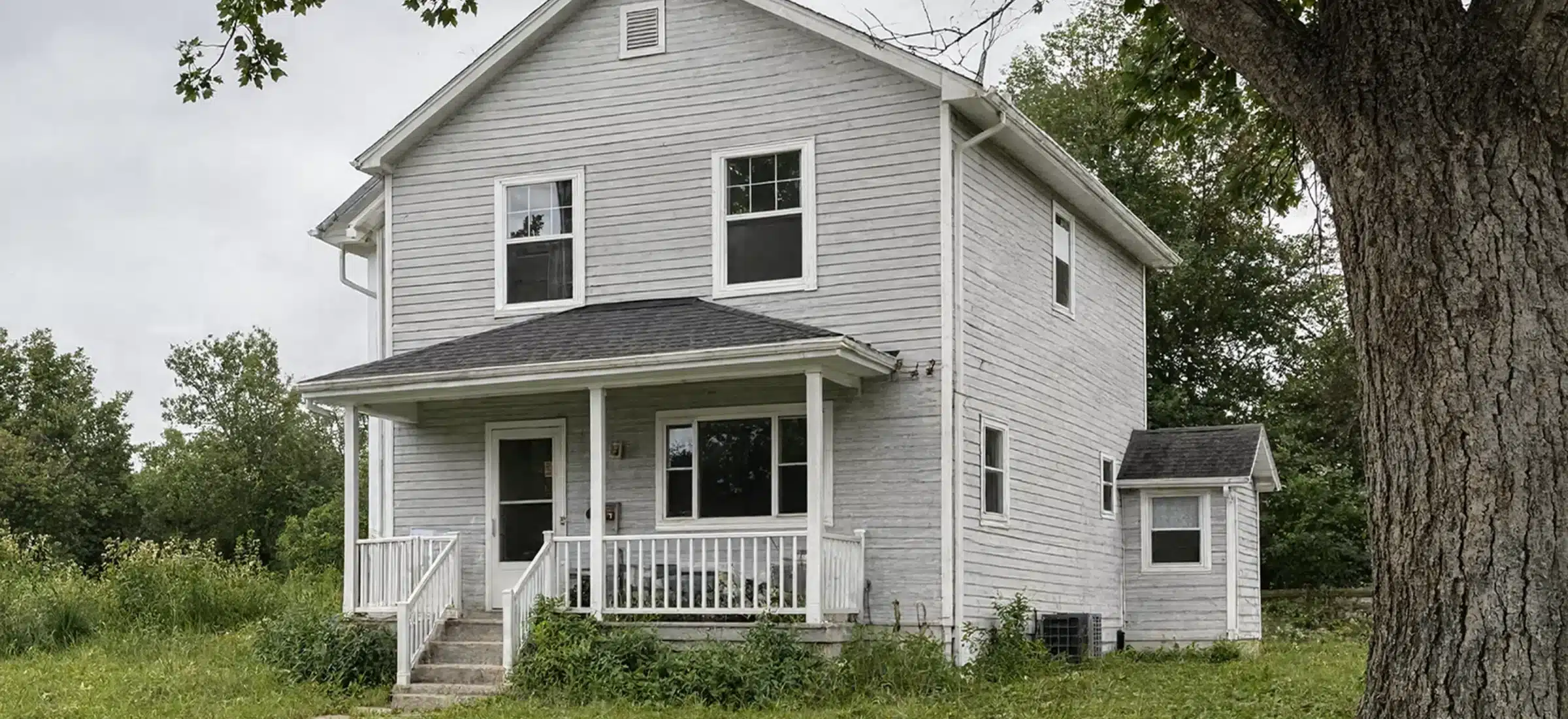
Real Estate with Causes accepts donated houses nationwide: inherited, vacant, tenant-occupied, damaged, dated, or simply no longer worth keeping. We prepare and record the deed. A house donation is a gift and not a sale, so there is no listing, no showings and no closing.
Every property gets a look. Name, phone and email are the only required fields.
Three steps, and the first one is a conversation rather than a commitment. Nothing is signed until you know exactly how the transfer will run and who is responsible for what.
Address, condition, who is on the title, and whether anything is owed against it. A specialist calls back, usually the same day, and tells you plainly whether it works.
Our staff draws the deed in the form the property's state requires and records it in that county. You sign and notarize, usually by mail. You do not need to travel.
On the day the deed records, the taxes, insurance, upkeep and liability are ours. You receive a written acknowledgment for your records and, where required, a signed Form 8283.
A straight comparison for a house you no longer want to hold. Which one is better depends on your equity, your basis and your tax situation, and a sale is sometimes the right answer.
| Listing the house | Donating the house | |
|---|---|---|
| Time to be done with it | Prep, listing, showings, buyer financing and inspection contingencies. A house needing work can sit for months. | No listing and no showings. Title drives the schedule, and a clean title with one owner usually records in weeks. |
| What you pay | Agent commission, seller closing costs, repairs a buyer demands, and every month of carrying cost until it closes. | No escrow, no closing and no commission, because a gift is not a sale. The qualified appraisal is your expense and your choice of appraiser. Back taxes and cleanout are usually the donor's, though we sometimes absorb them where the numbers support it. |
| Condition and cleanout | Buyers discount hard for deferred maintenance, and a lender can refuse the loan outright on a house that will not pass inspection. | No repairs and no staging before you talk to us. Leave what you do not want. Condition is a fact we work with. |
| Tax outcome | Capital gains tax on the appreciation above your basis, unless the house qualifies for the primary residence exclusion. | A charitable deduction reported on Form 8283. For a house held more than a year the deduction is generally fair market value, limited to 30% of AGI, with a five-year carryforward. |
| Tenants in place | Most retail buyers want the house empty, which means notice periods, relocation or waiting out a lease. | Tenants do not stop the conversation. The lease transfers with the property and we take it from there. |
| Where the value goes | To you, less commission, closing costs and tax. | To our charitable programs, less the cost of the transfer and the sale. |
We do not provide tax or legal advice. Deduction outcomes depend on holding period, property type, use and a qualified appraisal. See IRS Publication 526, Publication 561 and the Form 8283 instructions, and consult your own advisor.
Six situations we handle constantly. Find the one that matches yours and read what changes about the transfer, or call and describe it in your own words.
 Inherited and sitting empty
Probate status and how many heirs are on the title decide the timeline. We work with executors and with families who do not all agree.
Inherited and sitting empty
Probate status and how many heirs are on the title decide the timeline. We work with executors and with families who do not all agree.
 Tenants still in place
You do not have to empty it first. The lease travels with the property, and depreciation recapture is worth discussing before you decide.
Tenants still in place
You do not have to empty it first. The lease travels with the property, and depreciation recapture is worth discussing before you decide.
 Fire, water or storm damage
A house a lender will not finance is exactly the kind we see. Tell us what happened and whether an insurance claim is still open.
Fire, water or storm damage
A house a lender will not finance is exactly the kind we see. Tell us what happened and whether an insurance claim is still open.
 Dated and needing everything
Original kitchen, old systems, decades of deferred maintenance. No repairs are required before you talk to us, and none after.
Dated and needing everything
Original kitchen, old systems, decades of deferred maintenance. No repairs are required before you talk to us, and none after.
 Two states away
Deed form and recording follow the state the house sits in, not the one you live in. We prepare the documents for that county.
Two states away
Deed form and recording follow the state the house sits in, not the one you live in. We prepare the documents for that county.
 Behind on the property taxes
Reviewed, not refused. What matters is whether the amount owed is well below what the house can sell for, and what your county requires before transfer.
Behind on the property taxes
Reviewed, not refused. What matters is whether the amount owed is well below what the house can sell for, and what your county requires before transfer.
Real property runs on Form 8283, and the rules differ from the ones that govern other donated assets. Here is what actually governs the deduction on a house.
For a house you have owned more than a year, the deduction is generally fair market value as established by a qualified appraisal, limited to 30% of adjusted gross income, with a five-year carryforward for the excess. You may elect the 50% limit instead, but the deduction then falls back to your basis.
Above $5,000 the IRS requires a qualified appraisal and Form 8283 Section B, signed by the appraiser and acknowledged by us. Above $500,000 the appraisal is attached to your return. The appraisal is your expense and your choice of appraiser, which is what makes it qualified.
A holding period under a year, a house held as dealer inventory, or a rental with depreciation taken against it are all treated differently. A remaining mortgage makes the gift a bargain sale. None of these rule a donation out, they change the arithmetic.
Full tax benefits guide · How Form 8283 works · Capital gains and appreciated property
No repairs, no staging, no painting. Cleanout is usually the donor's responsibility, but leaving furniture and belongings behind does not stop a donation, and on properties where the numbers support it we do absorb the cost of clearing it. Tell us what is still in the house and we will tell you who handles it.
Yes, and it is one of the most common calls we take. Everyone on the title has to sign, so the practical questions are whether probate has closed and whether all the heirs agree. If the estate is still open, the executor can often act. Each owner takes a deduction in proportion to their share, so each should speak to their own advisor.
A mortgage does not automatically rule a gift out, but it changes what the gift is. A remaining balance makes it a bargain sale rather than a clean donation, which means gain to you on the debt portion. Whether it works comes down to the balance, the equity and the lender. Tell us those three figures and we will tell you where you stand.
You can, and there are a few routes. An outright gift with an agreed move-out date is the simplest. A retained life estate lets you keep living there for life while making the gift now, and a charitable gift annuity funded with the house can pay you an income. Each has its own tax treatment, so this is a conversation before it is a decision.
Title sets the pace. A single owner with clear title and nothing owed can often be done in a few weeks, most of which is document preparation and notarization by mail. Open probate, several heirs, a clouded title or a lender in the picture takes longer, and we tell you which situation you are in on the first call rather than at the end.
Eight other property classes, each with its own transfer rules and its own page.
No obligation and no pressure. If a donation is not the right route for your house, we will say so and point you at the one that is.