
Transfer tax
Alabama charges a deed tax of $1.00 per $1,000. By statute the grantee pays it, so on a donation it is ours.
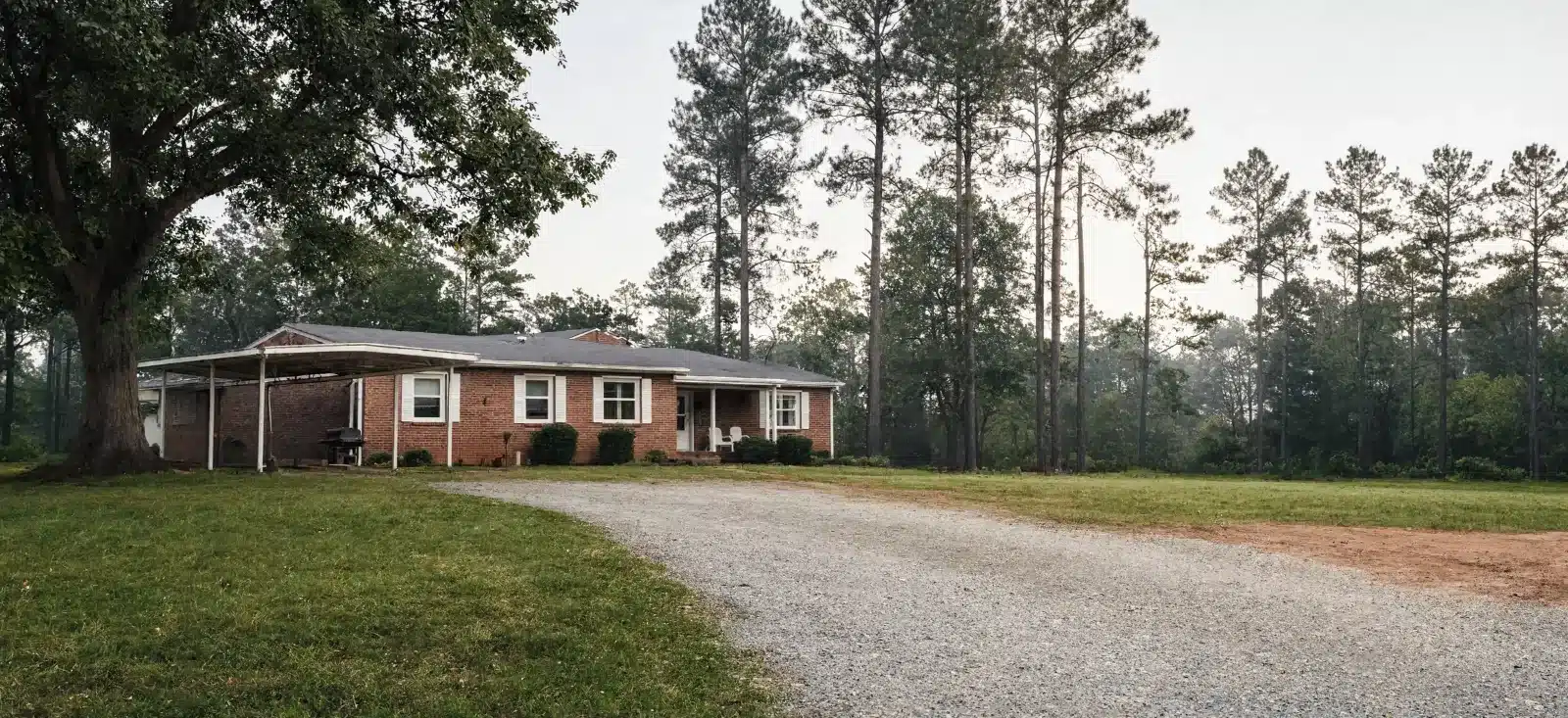
Alabama records deeds with the probate judge rather than a recorder or clerk, which surprises people from other states. It also has one of the country’s heaviest concentrations of heir property, land held in undivided family shares for generations, and a timber economy across the southern half of the state.
Federal tax rules are the same in every state. These three are set by Alabama and by the county where the property sits.
Alabama charges a deed tax of $1.00 per $1,000. By statute the grantee pays it, so on a donation it is ours.
In Alabama the probate court is the land records office. Deeds are filed there, the deed tax is collected there, and a real estate sales validation form accompanies most transfers. It is the same work as anywhere else, filed in a different place, and we route it correctly the first time.
Deeds are recorded with the probate judge’s office for the county where the property sits. You sign before a notary wherever you live, and we handle the filing.
Four situations that recur across the state.
Each links to the full guide for that type, including how a donation compares with selling.
Six Alabamas, each with its own reason property comes loose.
Steel-era housing, sound older neighborhoods where repairs outrun value, and vacant lots between occupied houses.
Row crop ground, fast-changing suburban values and inherited houses in neighborhoods that shifted quickly.
Storm damage, flood elevation questions and waterfront parcels worth more than the houses on them.
Heir property, large agricultural tracts and small towns with more buildings than buyers.
Peanut and cotton ground, pine plantation and rural housing.
Timber, hunting land and lake property held by out-of-area families.
Alabama charges a deed tax of $1.00 per $1,000. By statute the grantee pays it, so on a donation it is ours.
No. We prepare the deed in the form Alabama requires for the county where the property sits, you sign before a notary where you live, and we record it with the county probate judge.
Because in Alabama that office keeps the land records. It is the equivalent of a recorder or register of deeds elsewhere. Nothing about the transfer is unusual; only the counter is.
Alabama has a state income tax, and how it treats a charitable contribution is set by Alabama law rather than by us. Your federal deduction follows the usual IRS rules. Take the state question to your own advisor.
Not necessarily. Alabama gives a redemption period after a tax sale, and the arithmetic turns on whether the redemption amount sits well below what the land can sell for. Send the tax sale details and the parcel number rather than assuming.
We do not provide tax or legal advice. State and local transfer tax rules change; we confirm current requirements when we prepare each deed. Consult your own advisor.
The county and a parcel number are enough to start.